
The Best Non-Toxic Kitchen Cooking Utensils
One way to create a healthier kitchen environment is to switch your cooking utensils to non-toxic ones. I recently got rid of all of my plastic utensils, and it was a surprisingly easy and affordable change to make. Learn which materials are the most non-toxic, how to choose high-quality items, and what to look out for. Here’s how to make this one easy change to help create a healthier kitchen!
This page contains some affiliate links, which means I may receive a small commission, at no extra cost to you, if you purchase through these links. I only recommend products that I LOVE and personally use. Read more here.
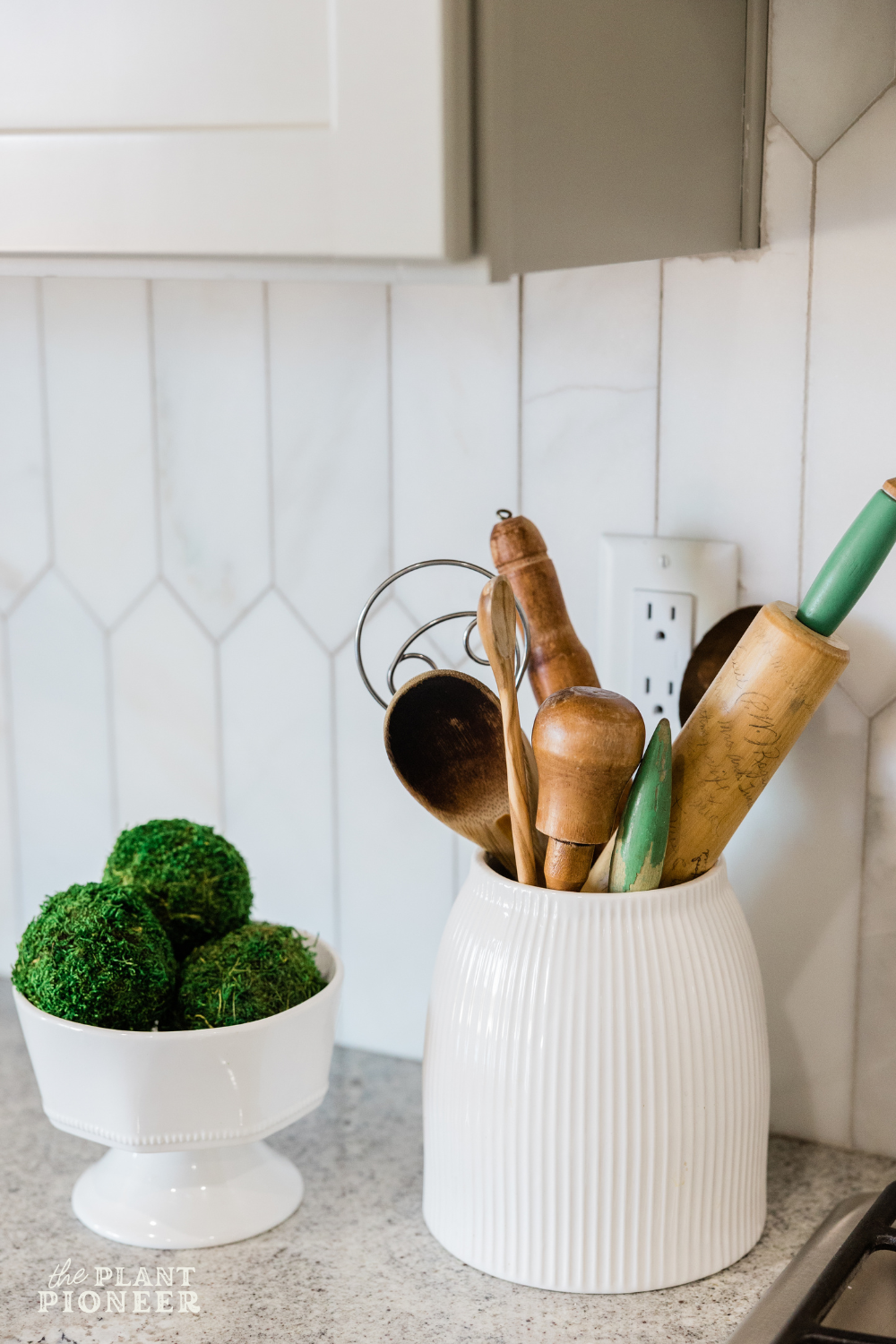
First Step- No More Plastic!
It’s best to avoid all plastic cooking utensils as they can release microplastics, dyes, BPA, BPS, and phthalates into your food (endocrine disruptors). The effects of these microplastics and other chemicals include, but are not limited to, chronic inflammation, endocrine disruption (hormonal imbalances), disruption to the gut microbiota, and immune-cell toxicity. I recently heard about some research that showed black plastic kitchen utensils can contain high levels of flame retardants, due to the plastic being recycled from electronics that used flame retardants. For this reason, I pay special attention to avoid black plastic (and other plastics too whenever possible).
Brominated flame retardants (BFRs) are a particularly concerning class of FRs due to their toxicity, persistence, and tendency to bioaccumulate. A number of BFRs are associated with human health concerns, including carcinogenicity, endocrine disruption, neurotoxicity, and reproductive and developmental toxicity (Center for International Environmental Law; Leonetti et al., 2016b; Li et al., 2014).
RESEARCH LINK
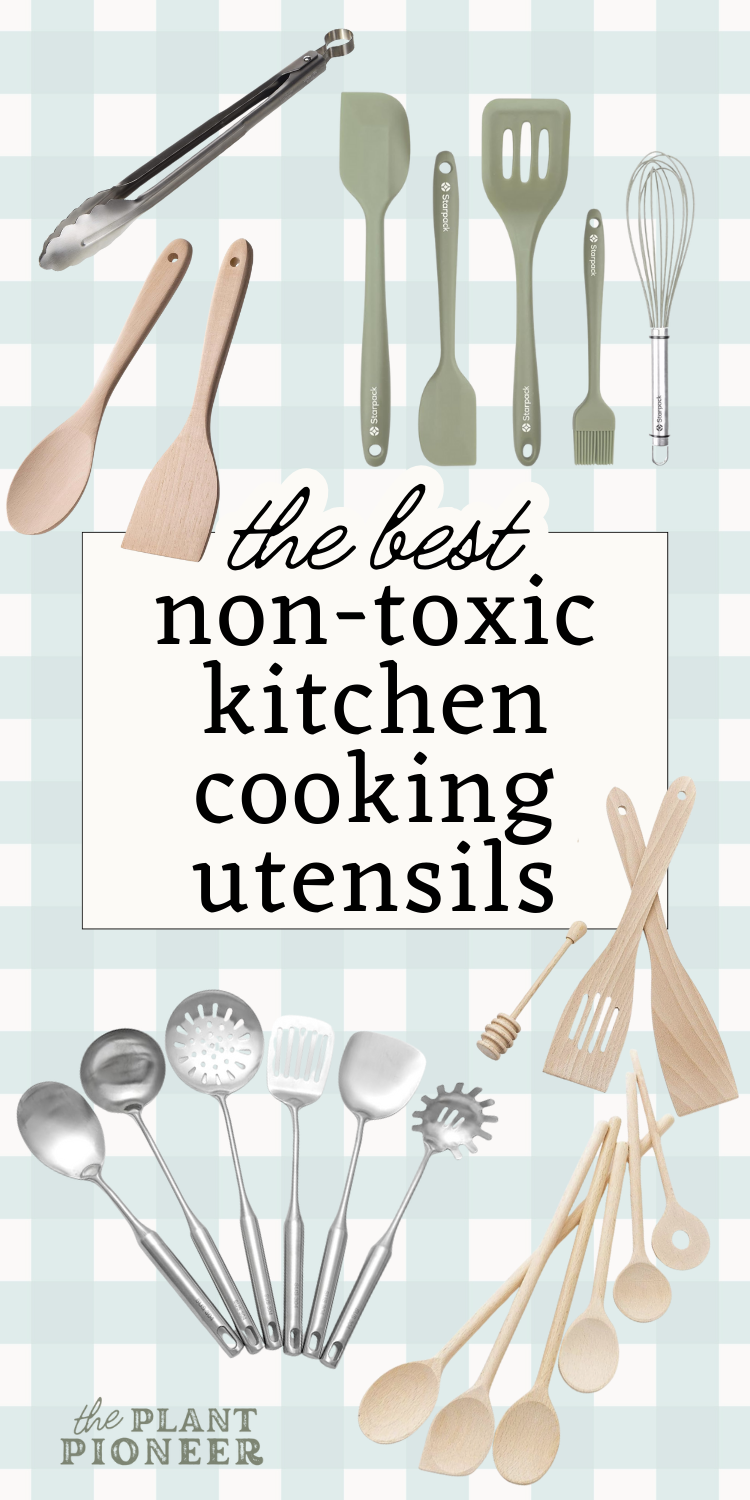
The best materials to use for non-toxic cooking utensils are those made of wood and stainless steel. The next best after these is silicone (use dependent). I have found that it works best to use all three, depending on the situation, and have been able to completely get rid of all of my plastic utensils by doing this!
Wood Utensils (no finish)- best choice overall!
Wood utensils are the best choice for all applications! The benefits of wood utensils are that they are safe for all types of pots & pans, are completely natural, biodegradable, and non-toxic (if they don’t have a finish). The only downside to wood is that it is best to handwash them, and they may require more care such as applying a safe oil or wax to them.
Another bonus to wood utensils is that they look beautiful sitting out on the counter, and gain a lovely patina with time. Because they have a “hard edge” but are not sharp, they are practical to use for almost any kind of cookware.
The most non-toxic wood utensils will be a solid piece of raw wood (no lacquer or finish) OR ones with a non-toxic finish such as with beeswax, tree resin, coconut oil, hemp oil. Often, mineral oil is used as a wood finish, and while this isn’t an ingredient of high concern, it is a petroleum by-product and is something I recommend avoiding. Also avoid ones that are made of wood pieces glued together, as these glues can release chemicals like formaldehyde. This is all true for wood cutting boards as well.
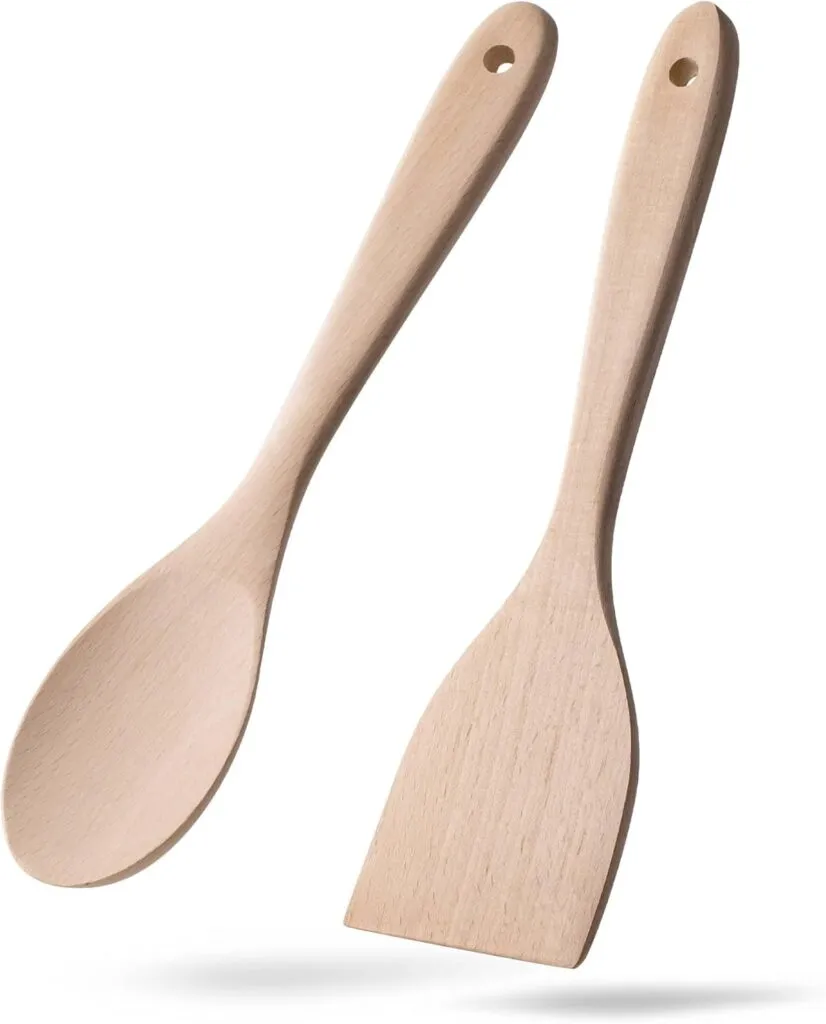
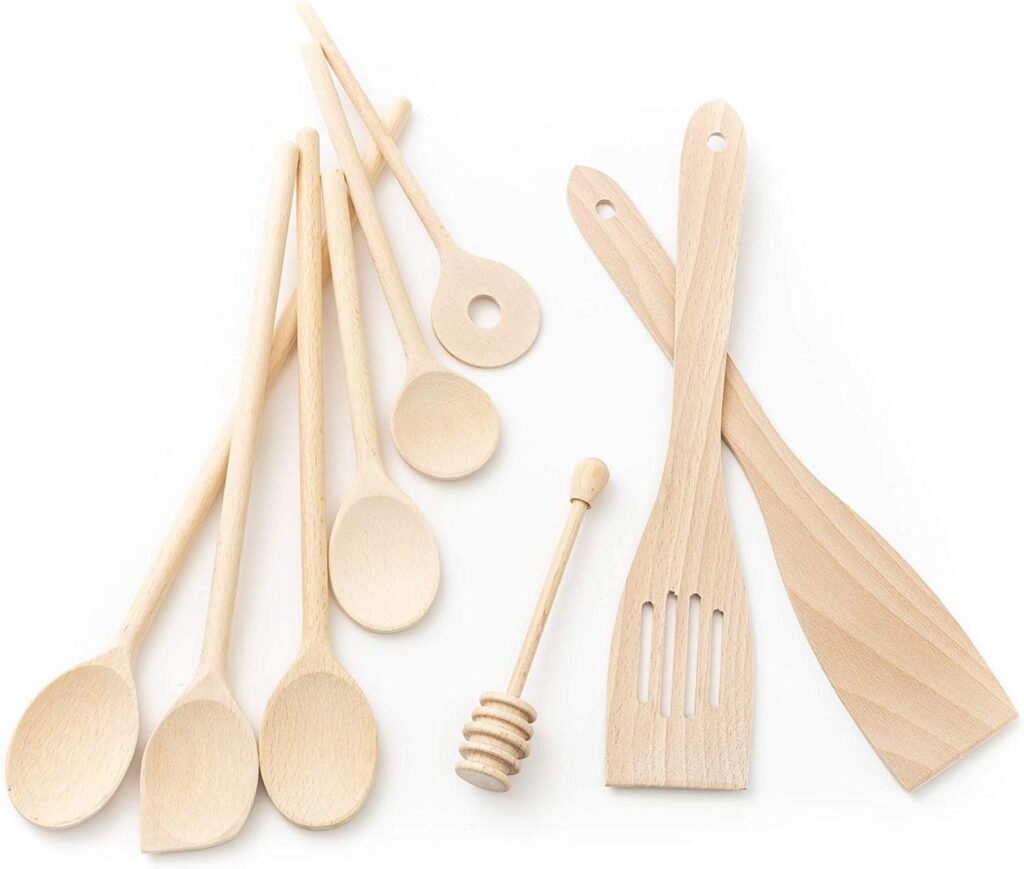
Here are some options for uncoated wood utensils, which are actually quite hard to find:
Uncoated beech wood utensil set
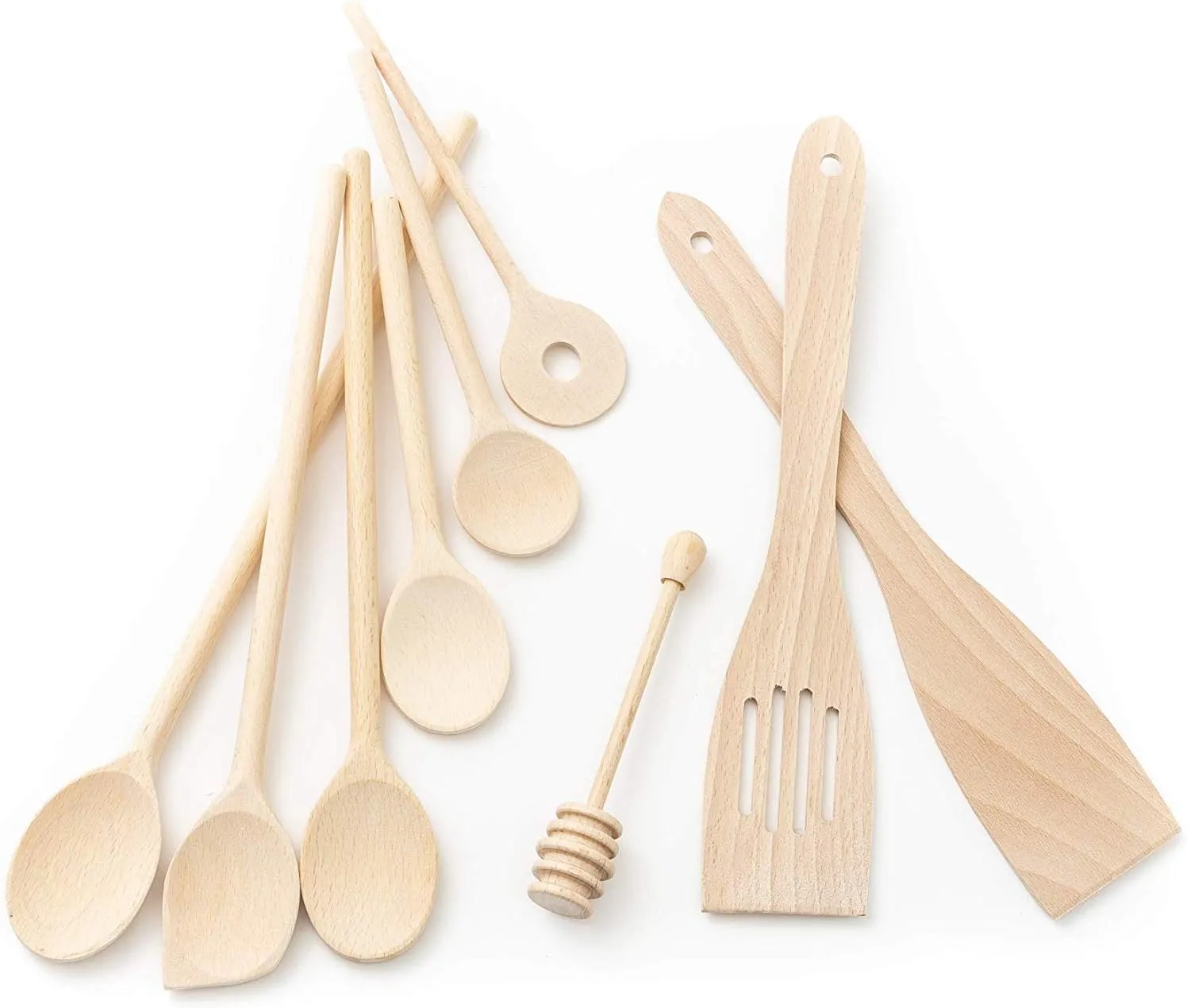
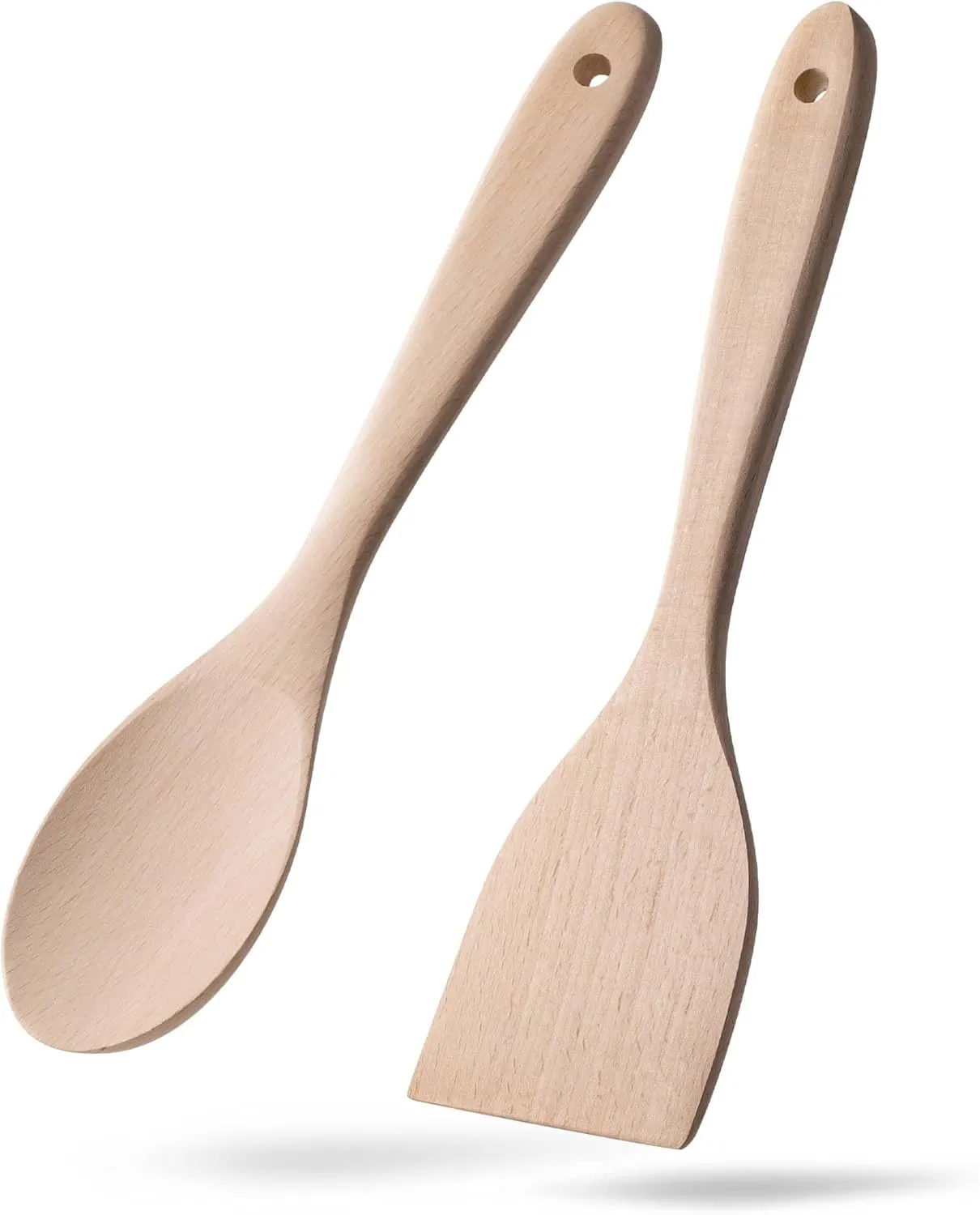
I have been on the hunt for a large, deep wood soup ladle made without any lacquer or finish (or finished only with beeswax, coconut oil, olive oil, or other food oil), and I can’t find one anywhere for a reasonable price in Canada right now! If I find a good one, I’ll be sure to add it to this list.
Stainless Steel
Stainless steel is the most low-maintenance, resistant to stains, and easiest to find. It can go in the dishwasher for quicker cleanup, however, the downside is that it can scratch many types of pots/pans, so it isn’t always ideal for every type of cooking. Because of this, I actually find that stainless steel is the type of utensil I use the least often for my everyday cooking (my pots and pans right now are all stainless steel and enameled cast iron… so not compatible with stainless steel utensils because they will scratch).
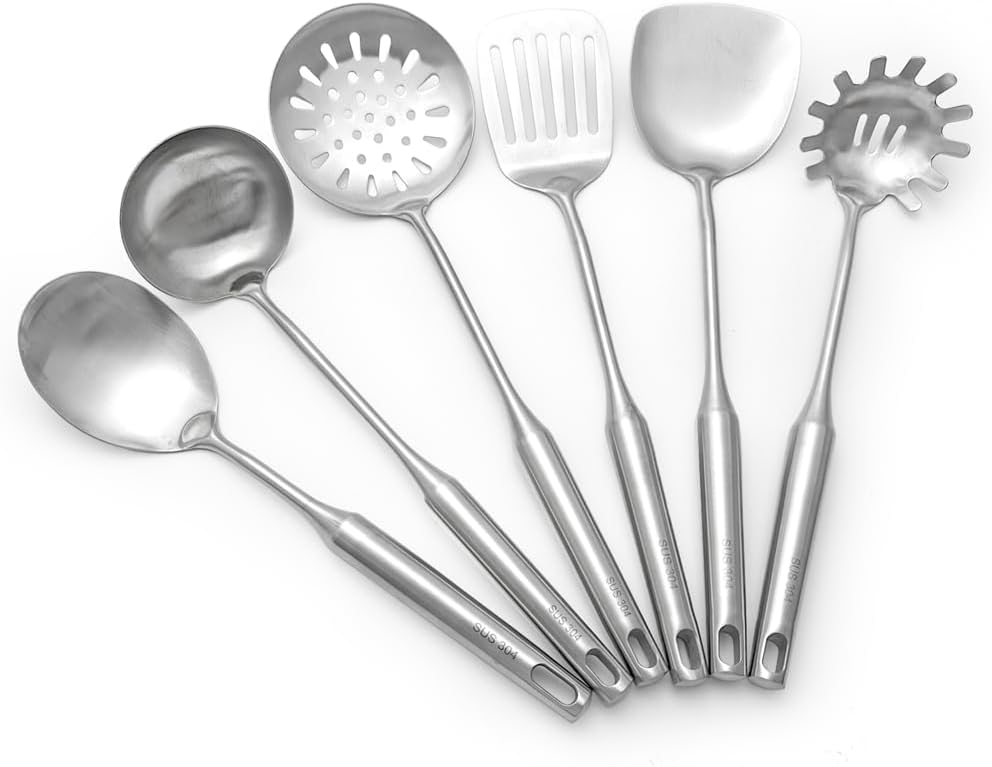
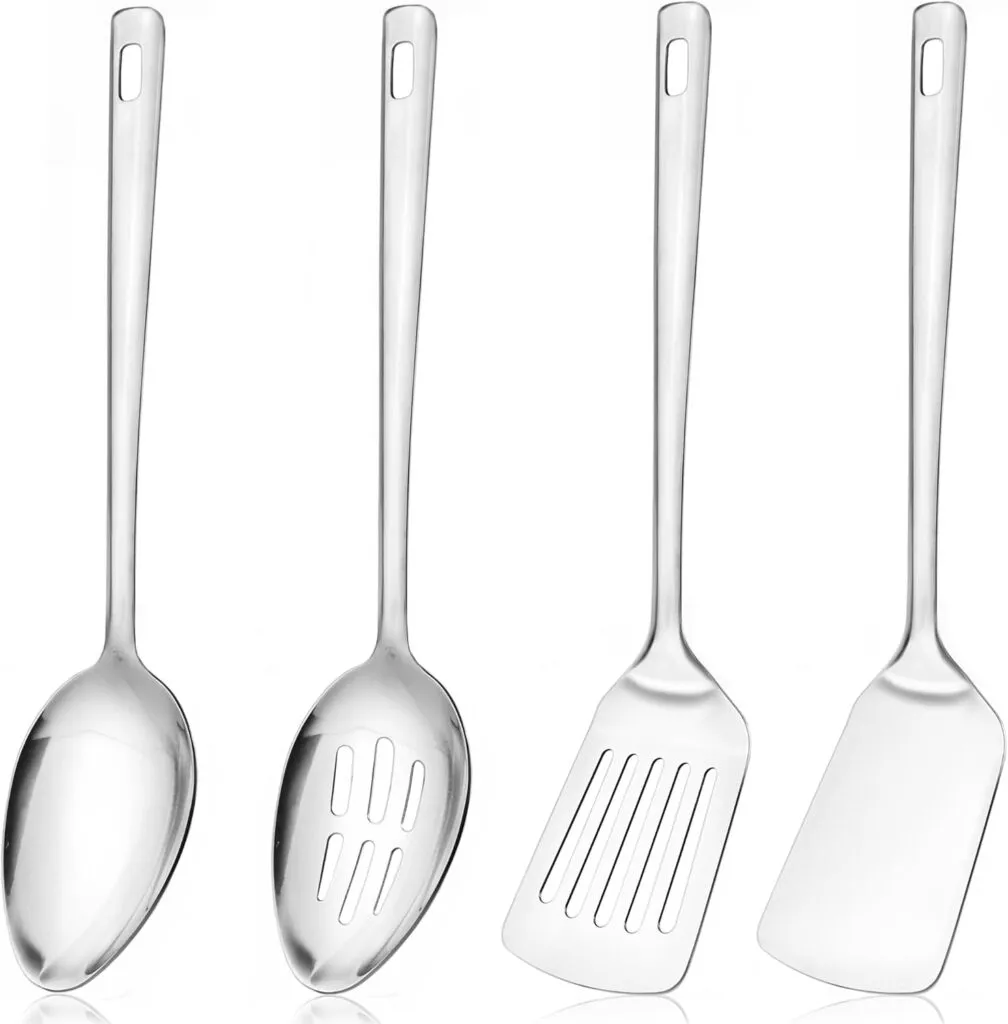
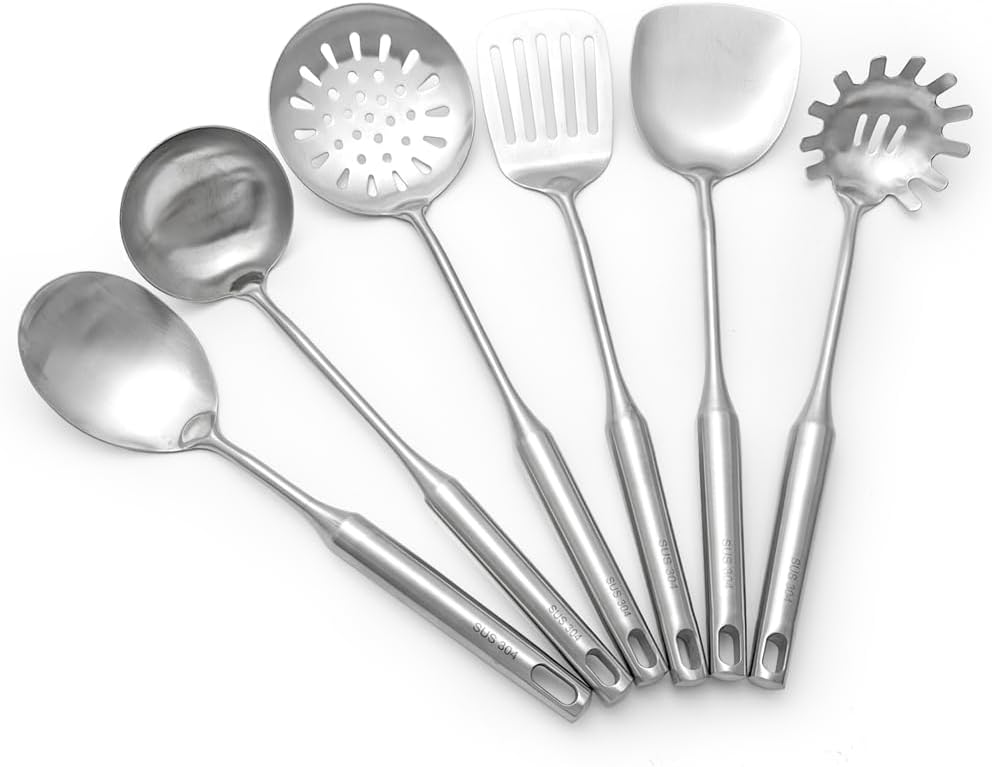
Look for stainless steel pieces that are one solid piece of stainless steel, rather than multiple pieces welded together. These ones will be the best quality and the most durable, and will also avoid the possibility of lead soldering in the joints.
When looking at stainless steel items, you will see different number grades like 18/10, 18/8, or 18/0. The first number is the percentage of chromium it contains, and the second number refers to the percentage of nickel in the steel, which is added to provide corrosion-resistance and strength. If you have a severe nickel allergy, going with 18/0 stainless steel is a good idea (see my example below), although it will be less durable.
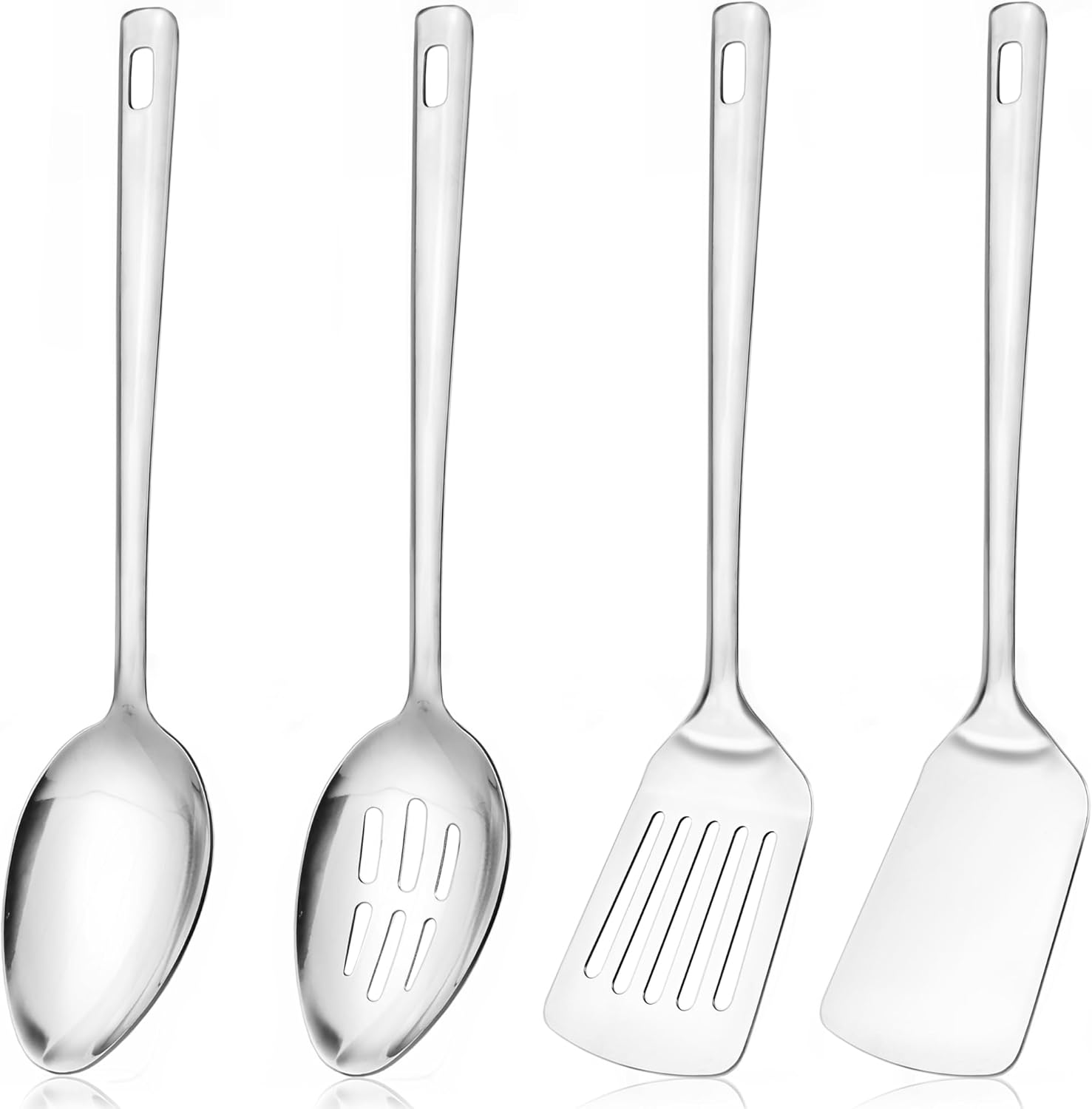
Here are some examples of some good stainless steel items:
18/0 Stainless Steel Utensil set (no nickel)
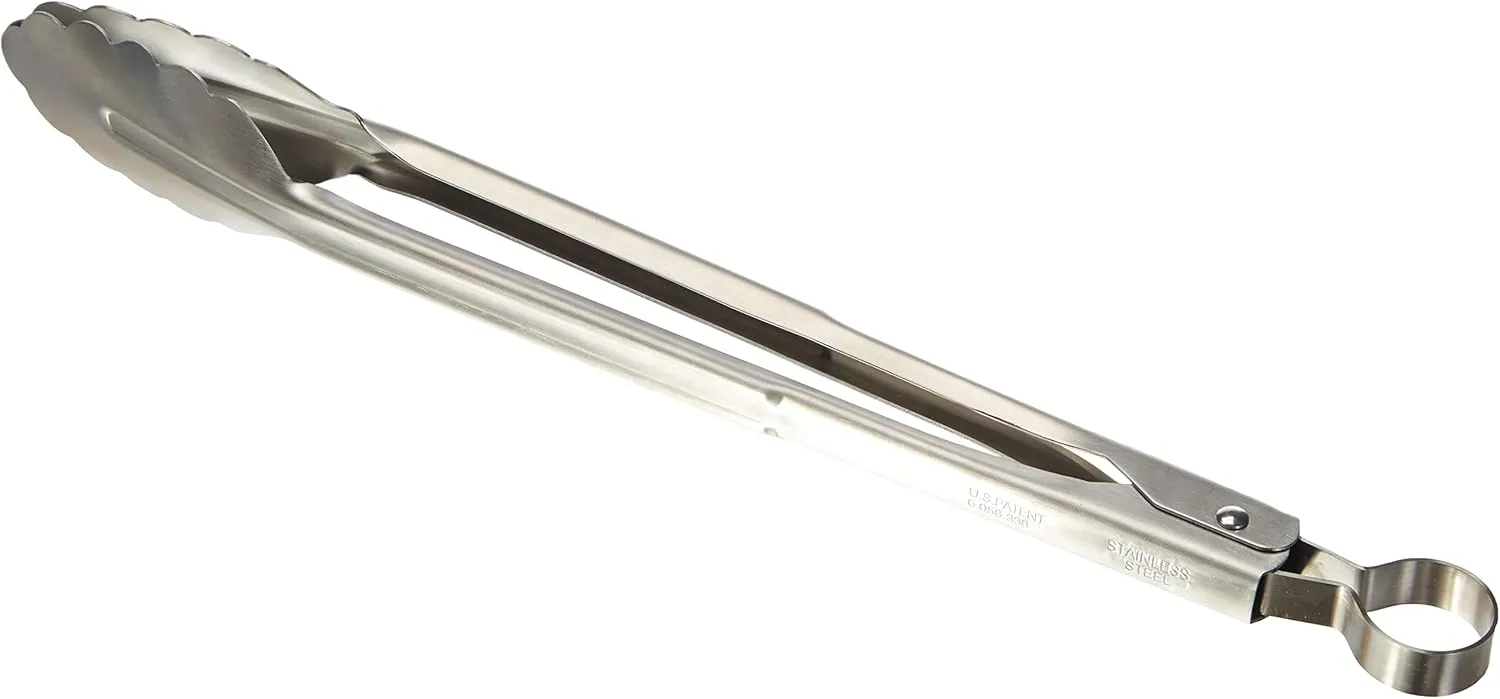
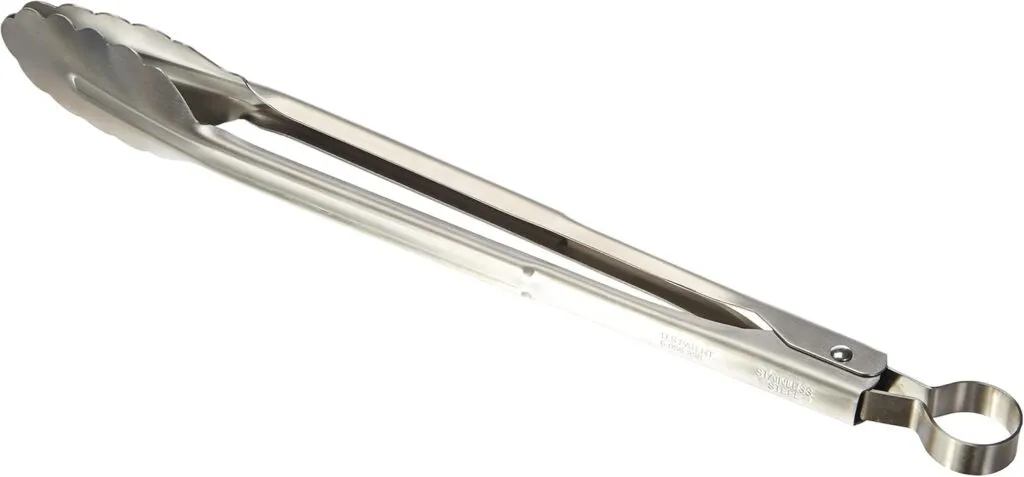
Stainless Steel Locking tongs– These are the tongs I have and they are great!
Stainless Steel Utensil set– This set contains utensils that are all one-piece without any welded joints.
Silicone- is it really safe?
Silicone is nice when you need a utensil that is both dishwasher-safe AND won’t scratch your cookware. But, the safety of silicone depends on how you use it and the quality of the silicone. It’s best to look for certified food-grade, medical-grade silicone, or platinum silicone, as this typically indicates a greater resistance to chemical leaching. Lower-quality silicone can also contain fillers or not be cured properly. Unfortunately, there is also a lack of regulation for labeling requirements, making it hard for consumers to know with certainty what the quality of the silicone is.
Studies have shown that some silicone baking products, when heated, can release VOCs and siloxanes, which are reproductive toxins. With all of that said, it’s best to avoid silicone for high-heat applications (silicone muffin tins, loaf pans, soup ladles, etc.). Current research, which is still fairly limited, shows that high-quality silicone is relatively non-toxic when used for cold or room temperature applications, or when used for brief moments (like using a spatula to transfer food to your plate).
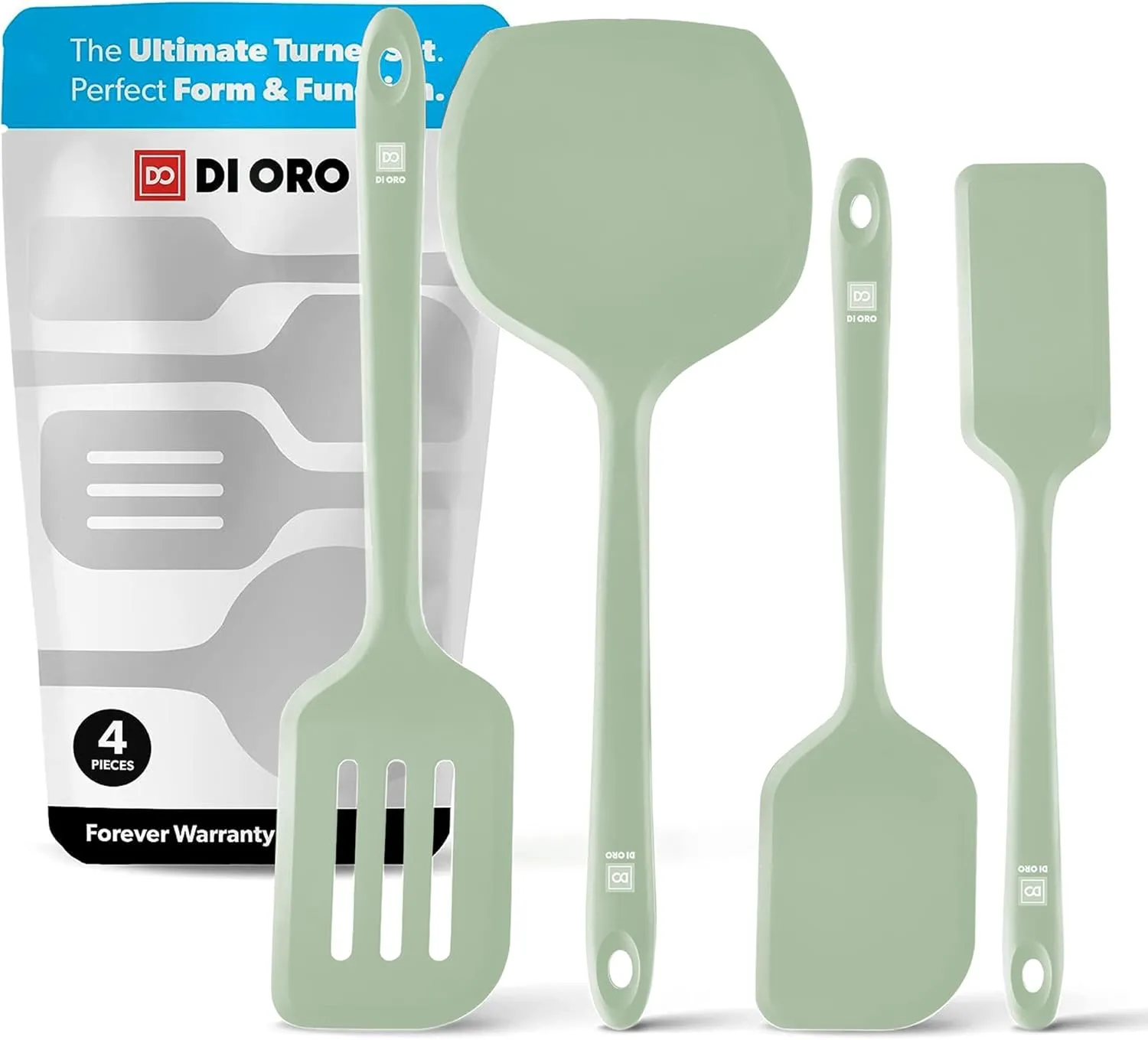
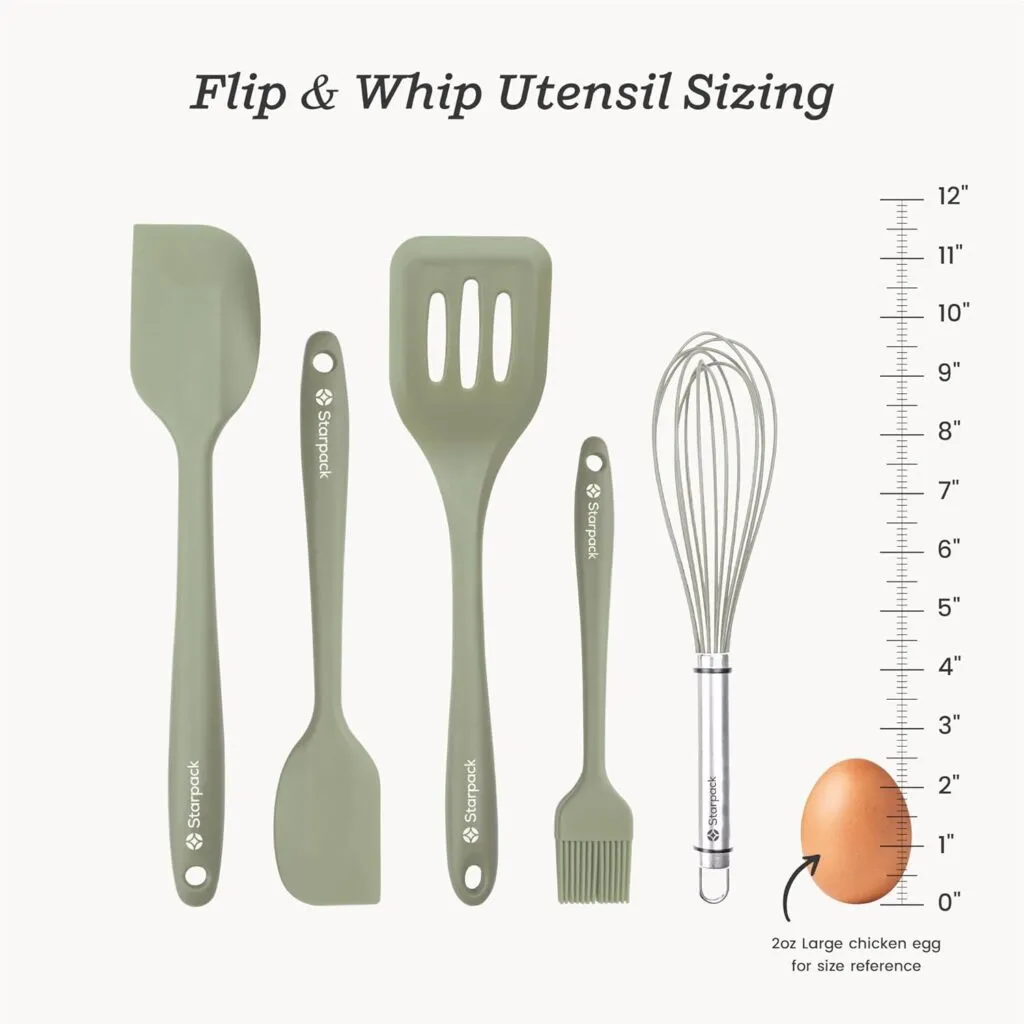
High-quality silicone pieces are quite hard to find! Below are some that I found and are the brands I would choose if I needed to buy new silicone items:
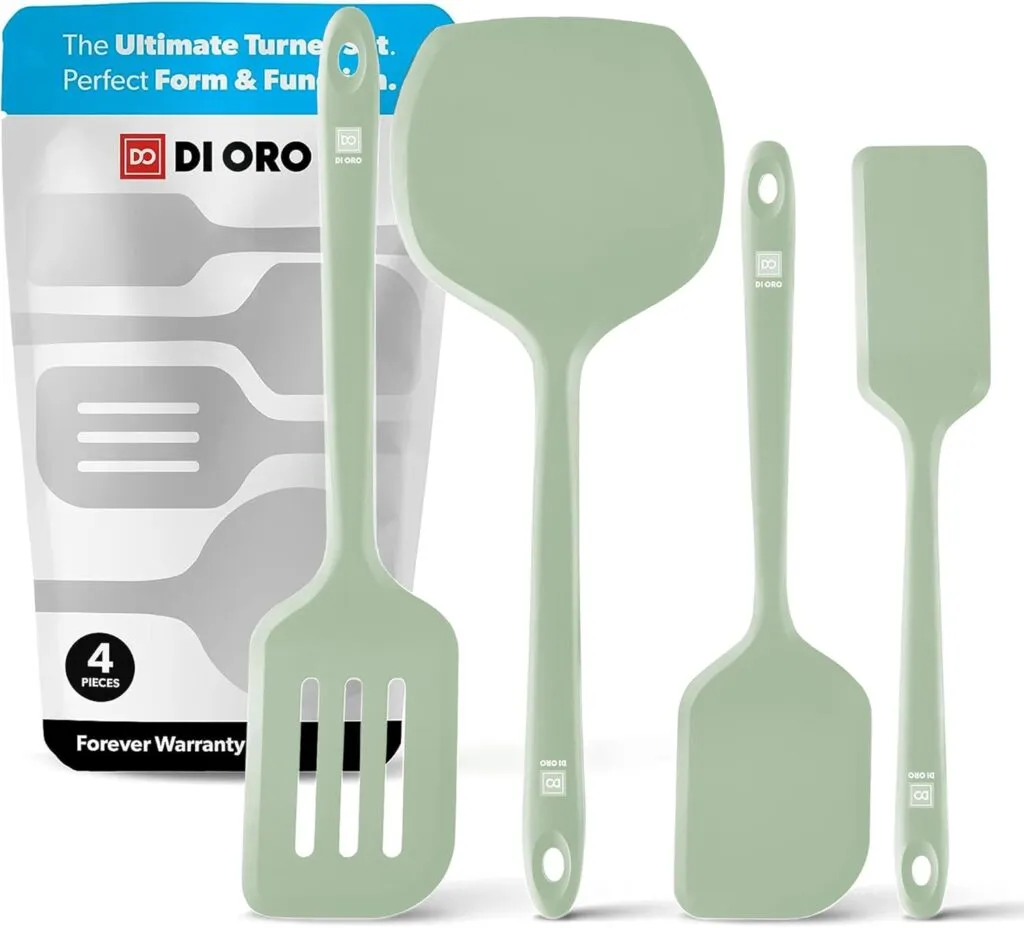
High-heat silicone set (left) or this version (right)- This brand is premium silicone with LFGB European certification.
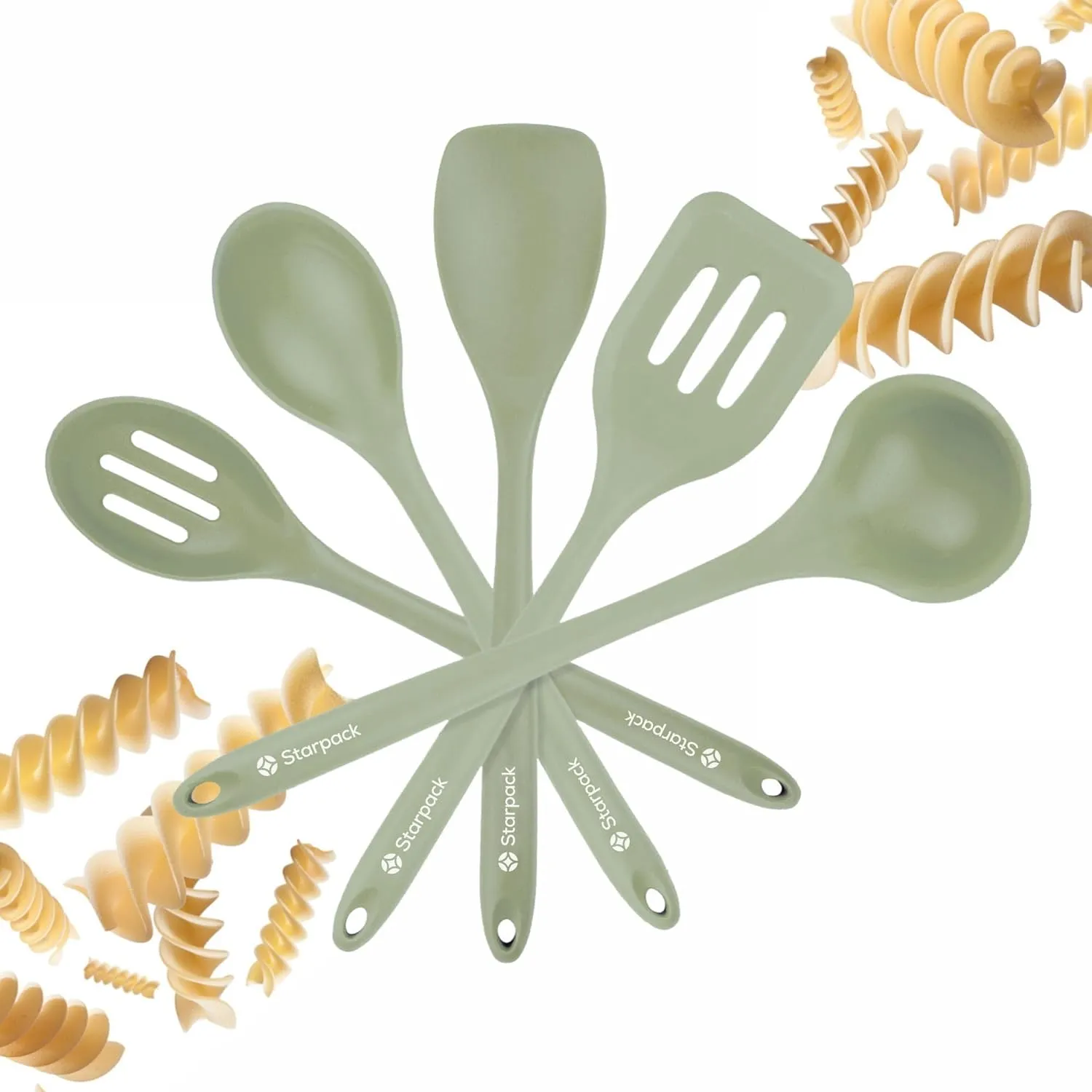
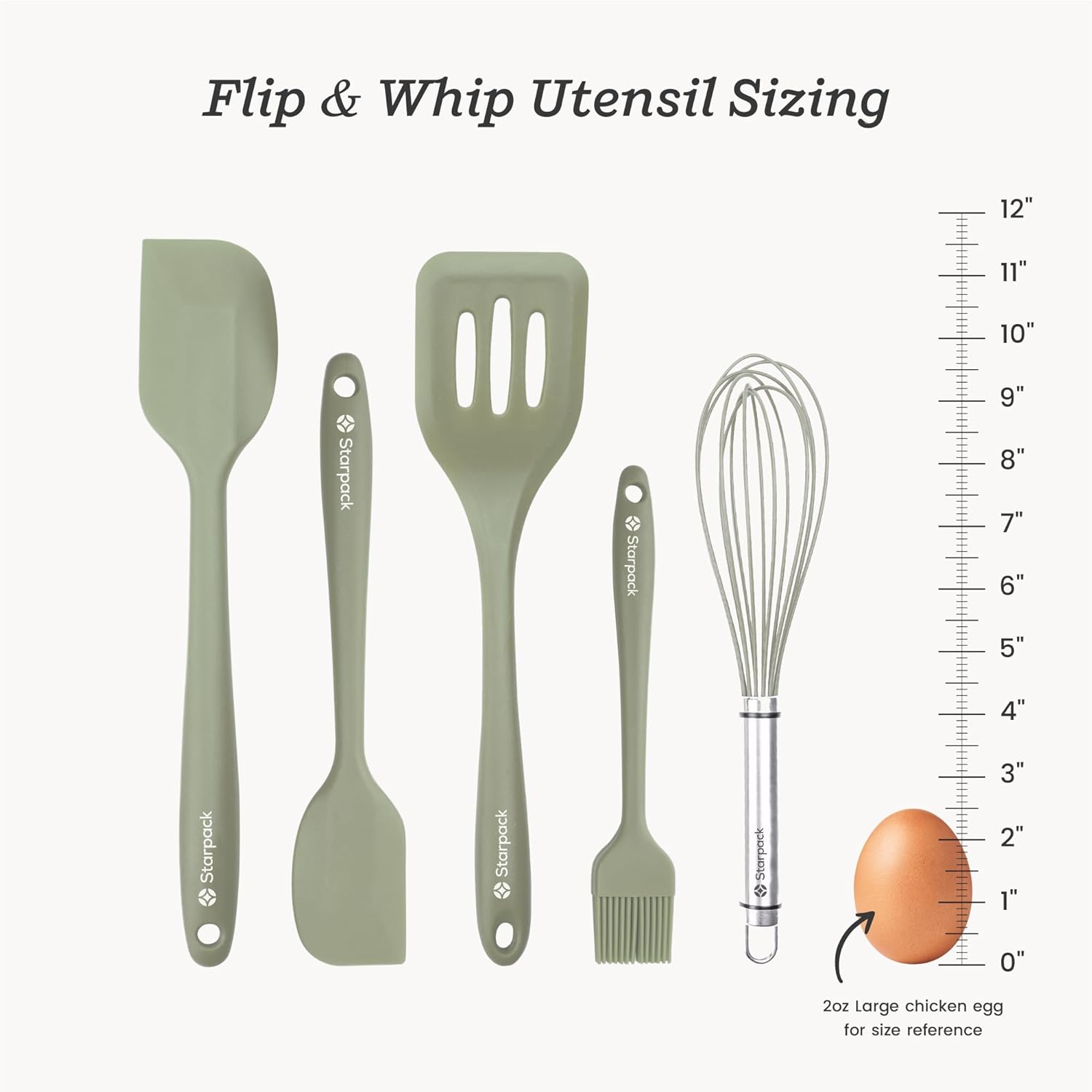
High-Heat Silicone Spatula Set– This brand is also LFGB certified.
I hope these tips will be helpful in creating a healthier home and removing more plastic from your kitchen. Save this post to Pinterest so you can refer back to it!



Join the List
Stay informed & receive my latest healthy living tips to your inbox.