
The Best Non-Toxic Body Sunscreens (safer for you + the environment)
Finding a good natural sunscreen can be equally as challenging as it is to find an effective natural deodorant. The main disadvantage with mineral sunscreens is that because the minerals sit on top of the skin and provide a physical barrier to the sun’s rays, they can leave a white cast on the skin. Most people prefer not to look like a ghost on the beach! 😉
Read on to learn about all of the best options for natural mineral sunscreens, my experience with them, and why I recommend using them instead of chemical sunscreens.
This page contains some affiliate links, which means I may receive a small commission, at no extra cost to you, if you purchase through these links. I only recommend products that I LOVE and personally use. Read more here.
I’ve tried several brands of mineral sunscreens and wanted to share my experience with them, and hopefully it will help you make the best decision for you and your family! When reading reviews for mineral sunscreens, it’s quite common to see reviews that say the exact opposite of each other. For example, one will say the sunscreen blended easily and didn’t leave a white cast, while another person will say it left their skin greasy and/or sticky and did leave a white cast. Talk about confusing!
I think there are a lot of factors that determine why people sometimes get different results, so I recommend trying a few different brands until you find the one that suits you best! We all have different priorities when it comes to sunscreen, whether that be in regards to the scent, the price, how natural the ingredients are, how easy it is to apply, whether it’s waterproof or easy to wash off, etc. Each of the brands I mention below have different pros and cons.
Summers where I live are short, so I don’t have the opportunity to use sunscreen that often (I also try not to use sunscreen if it’s not truly necessary). But when I do try a new one, I’ll be sure to keep this list updated with my favourites!
What You Need to Know About Mineral Sunscreens vs. Non-Mineral Ones
Non-toxic, natural sunscreens work by using minerals that sit on top of the skin, creating a physical barrier that disperse the sun’s rays. The safest sunscreens are made with titanium dioxide and/or zinc oxide, which have very limited, or no, absorption into the skin further than the top layers. The mineral pigments are white, which is what causes there to often be a white cast on the skin.
Other sunscreens work by using chemicals known as UV filters that sink into the skin. They are absorbed into the bloodstream, and multiple studies have shown the health risks that come with that, which include harm to the reproductive system, allergic skin reactions, toxicity to aquatic life and coral reefs, and possibly carcinogenicity. For further details regarding the health risks, I recommend reading this article from the EWG that summarizes the risks from use of chemical UV filters like oxybenzone, octinoxate, homosalate, avobenzone, octisalate, and octocrylene.
According to studies published by the FDA (linked in the article above), oxybenzone, octisalate, octocrylene, homosalate, and avobenzone, are all absorbed into the body after sunscreen use. What’s even more alarming is this:
These studies also reported that the ingredients could be detected on the skin and in the blood weeks after they were last used. Other studies have reported detecting sunscreen ingredients in breast milk, urine and blood plasma samples, confirming they’re absorbed into the body through skin.
Environmental working group
These health risks are especially harmful to children, who are even more susceptible to the hormone-disrupting effects of these toxic ingredients.
Another ingredient of concern that you should look out for is Butyloctyl Salicylate. This is a controversial ingredient that is essentially a chemical SPF enhancer. This article summarizes some of the issues with it, including how it is essentially the same chemical as octisalate (otherwise known as ethylhexyl salicylate), with some minor modifications, allowing it to get around FDA labelling restrictions. I avoid this ingredient whenever possible!
Are Titanium Dioxide and Zinc Oxide Safe?
Yes! There has been a bit of controversy over these ingredients in recent years, but not in regards to sunscreens. Titanium dioxide has been linked to colon cancer when ingested, and it can be harmful to the lungs if inhaled. However, when it is used as a physical barrier on the skin like in sunscreens and in makeup, it is definitely safe! (Be careful not to inhale any when using loose mineral powders for makeup or sunscreens.)
In fact, the FDA stated in 2021 that only two ingredients out of 16 that they reviewed are GRASE (generally recognized as safe and effective), which are titanium dioxide and zinc oxide. This means that NO other sunscreen ingredients are officially considered safe, and part of that is because of limited data.
Another concern about the use of these minerals has been about nano-sized particles, and concern about if they can cross the skin barrier and enter the bloodstream. This is why you’ll often see brands describe the mineral particles that they use as non-nano. More research is needed to know for sure what risk nanoparticles pose to us, but I definitely think it’s best to play it safe in this regard and avoid nanoparticles.
The reason some companies may use nanoparticles is that the smaller particles reduce the white cast on the skin while still allowing for high SPF values. The EWG mentions that the term “non-nano” is misleading because the properties of the mineral particles can vary widely, however, I appreciate that some companies will specify the actual size of the particles that they use (like Badger).
I recommended reading this article from the EWG that discusses the use of nanoparticles in sunscreens. As stated in the article, “…this study tested the penetration of zinc oxide [nanoparticles] on human volunteers who applied sunscreens twice daily for five days but found less than 0.01 percent of zinc entering the bloodstream.”
Water-Resistant vs. Not
Something else to keep in mind with natural sunscreens is that they tend to be thicker than chemical sunscreens, taking a bit more effort to apply and rub in, and can sometimes feel a bit sticky on the skin. This is often the case for the products that are water-resistant. The product “sticking” to your skin is literally what prevents it from coming off in the water.
Water-resistant sunscreens are also harder to remove in the shower/bath! This is a common complaint of mineral sunscreens. If you want to avoid this altogether, try one that isn’t water-resistant.
If you want to avoid that sticky feeling altogether, or use one that is easier to rub in, then I recommend using a product that isn’t water-resistant (like the Green Beaver spray discussed below). Of course, you’ll have to base this on whether you’ll be doing a lot of swimming or not.
My Top Sunscreen Picks
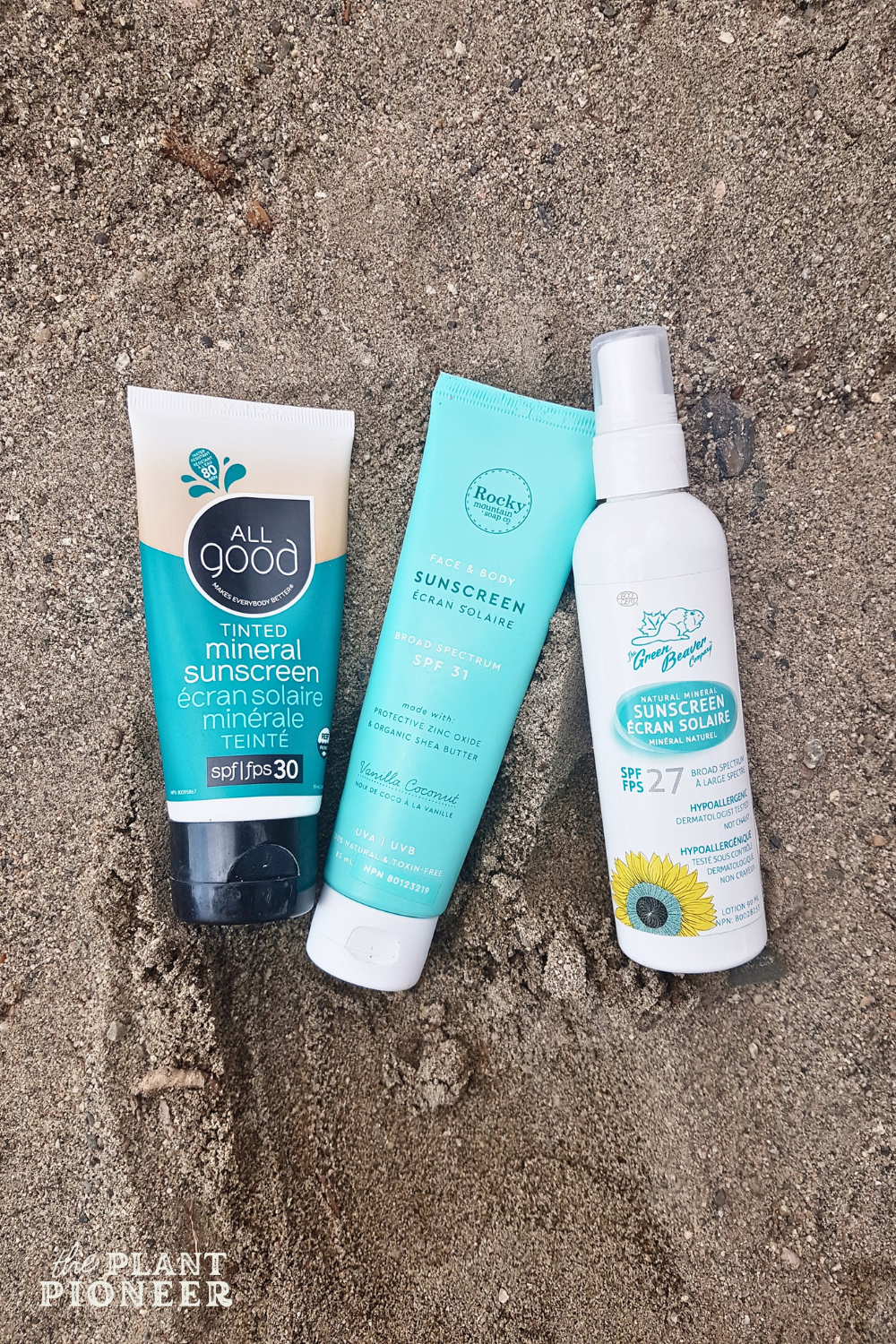
Green Beaver- Spray SPF 27
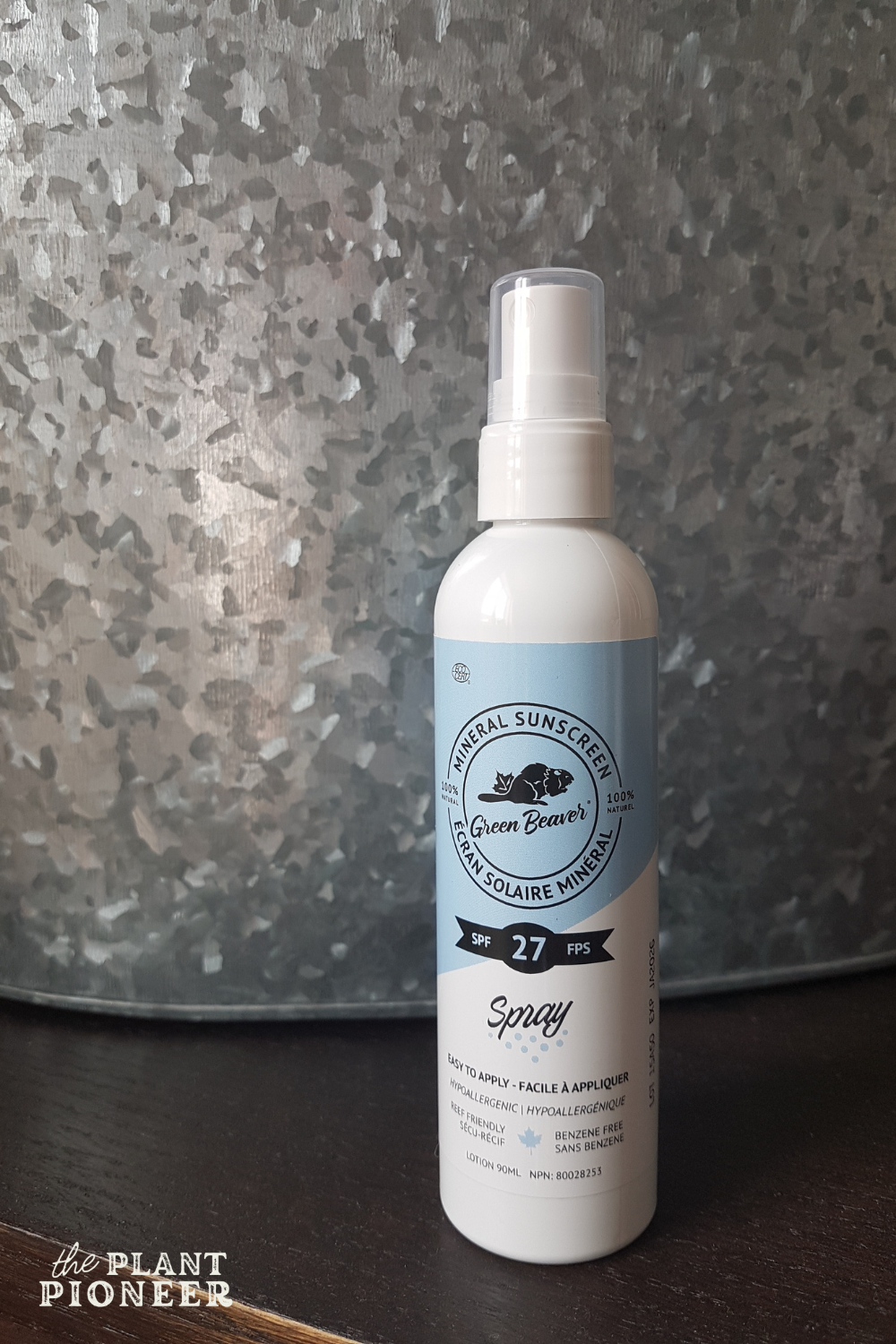
What I loved about this one is it did not make my skin look white, and it is easy to apply due to the thinner consistency. The spray application is also convenient. Please note, this is NOT an aerosol spray, which you definitely want to avoid- it is more of a “squirt” spray.
An important note on this one is that it is not water-resistant. The only thing I didn’t like about it is that it left my skin feeling a bit oily. I asked my mom which natural sunscreens she has liked so far, and she also picked this as one of her favourites.
All Good- Tinted SPF 30
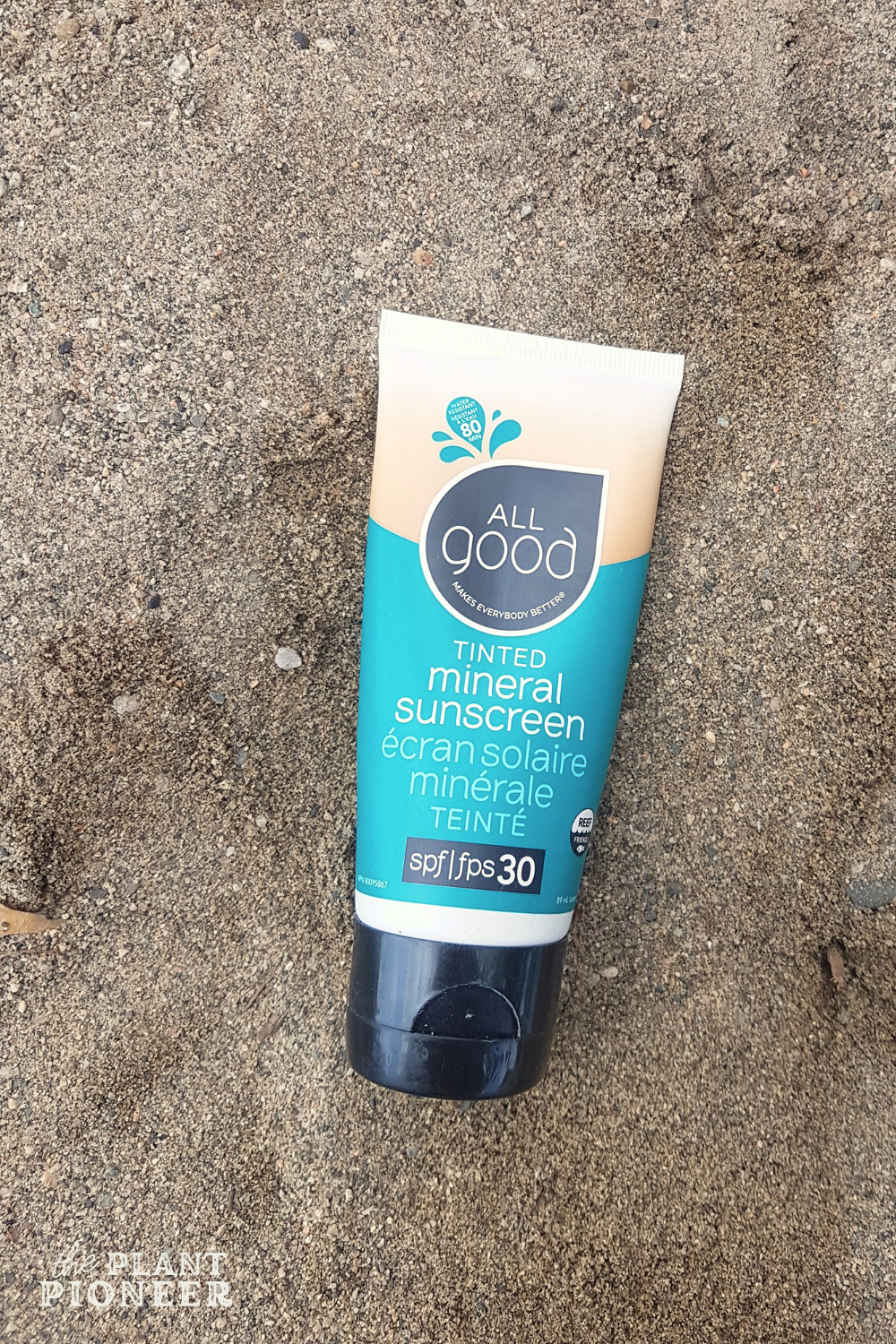
I used this one recently on a hike and really liked it. I love that it’s tinted, which really diminished the appearance of white cast on the skin, and it blended into my skin really nicely. It left my skin feeling very soft and not greasy.
This is definitely one of my favourites! The EWG currently rates it as a “2-low hazard” (the lower the number, the better), but in looking at the ingredients, I can’t see any reason why it would be rated worse than some of the others on this list that are EWG Verified.
I only recommend the tinted one for now, because of the use of Butyloctyl Salicylate in most of their other formulations (it is not in the tinted one pictured above). This is a controversial ingredient that is essentially a chemical SPF enhancer. This article summarizes some of the issues with it, including how it is essentially the same chemical as octisalate (otherwise known as ethylhexyl salicylate), with some minor modifications, allowing it to get around FDA labelling restrictions.
I’m disappointed to see that they use Butyloctyl Salicylate in some of their sunscreens, because I really do like this tinted one and would have preferred being able to recommend all of their products.
Attitude
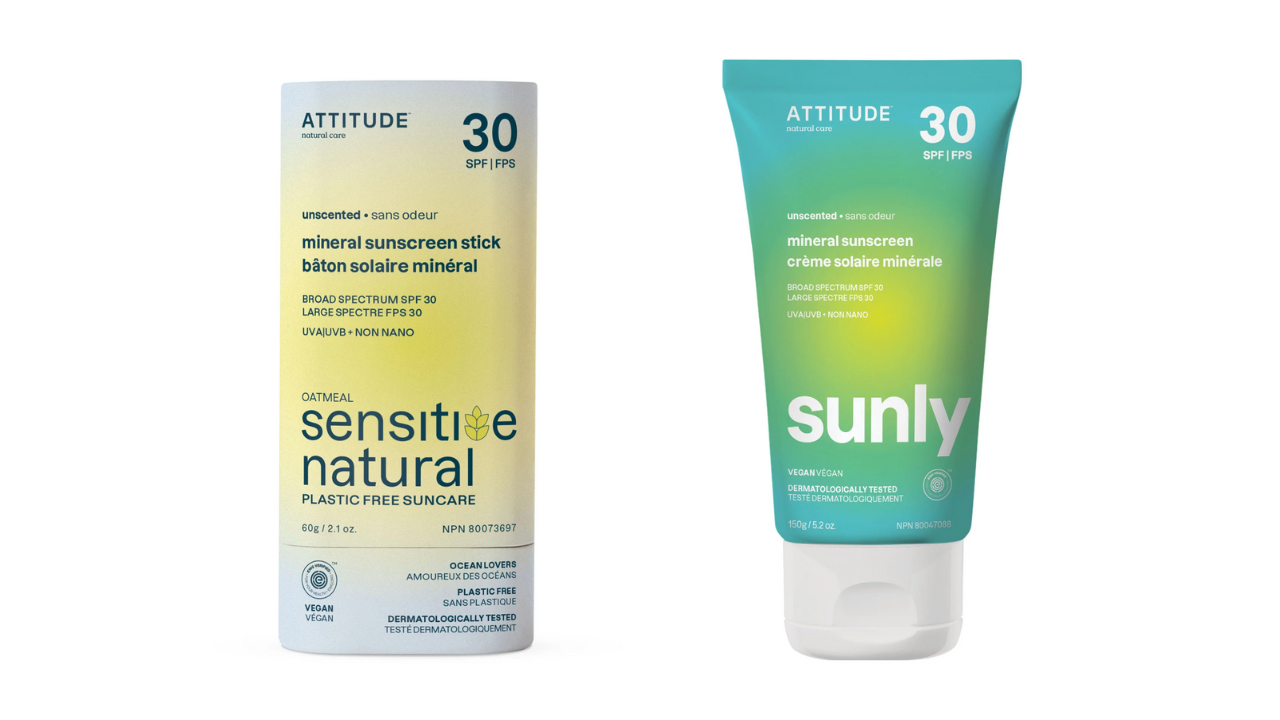
The first time I tried an Attitude sunscreen, I didn’t love it. It left my skin feeling sticky, I didn’t like the scent, and I didn’t like how much of a white cast it left on the skin. However, since then, they have come out with new formulas and additional options and they sound promising!
The best part about these ones is that they are EWG verified. This means that they meet EWG’s strictest standards for safety, provide full transparency about the ingredients, and do not use any “unacceptable” ingredients. Although, there are other options on this list that have ingredients that are more natural than this one. Like many of Attitude’s products, I recommend getting the unscented version, because it’s unclear if their fragrances are natural.
It is conveniently available here on Amazon, and this is the ‘sensitive natural’ stick application one.
Badger
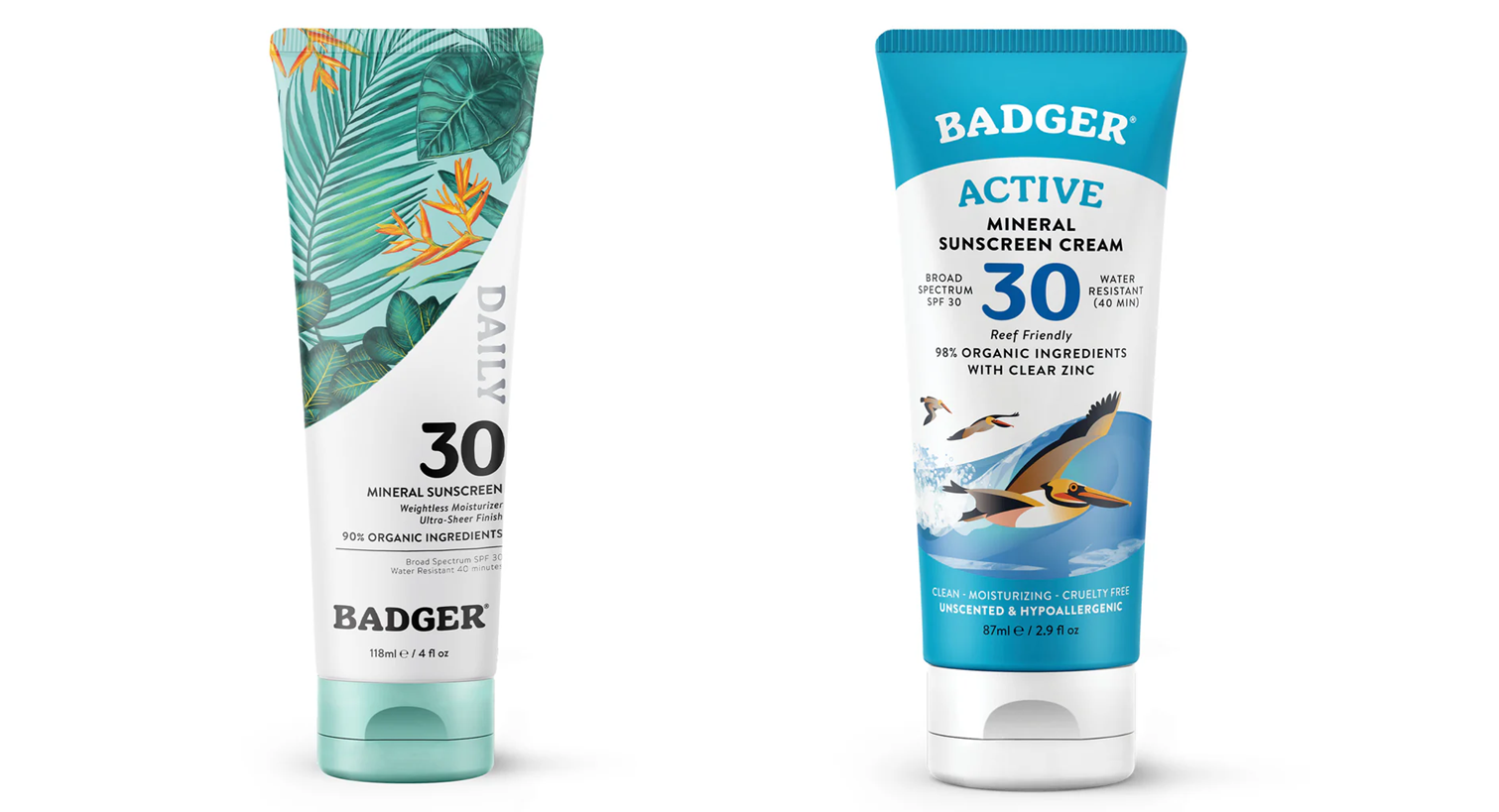
The best thing about Badger sunscreens is how natural they are! They use truly natural, simple formulations like beeswax + sunflower oil + coconut oil + vitamin E. It doesn’t get much more natural than that! In addition, their prices are some of the more affordable on this list.
Badger uses organic ingredients, and uncoated non-nano zinc oxide for their products. According to their website they use a “clear zinc oxide”, which “… is a specialized type of mineral zinc oxide powder whose particles have a porous surface texture (like a sea sponge) that doesn’t reflect as much visible light as standard non-nano zinc oxide and is therefore less whitening on the skin.”
I tried one of their sunscreens a couple of years ago. While it was marketed as being “clear zinc” that wouldn’t leave a white cast, I found that it did leave a slight white cast. But I did like it overall, and would buy it again!
The ‘Daily Mineral Sunscreen SPF 30’ pictured above on the left is a new formulation that is supposed to have a more lightweight feel. I think it will be closer to the application feel that I find easier to apply, so I’m excited to try it in the future!
In Canada, you can currently shop Badger products here on iherb.com or here on well.ca, both with free shipping options.
Just Sun- SPF 30 Body
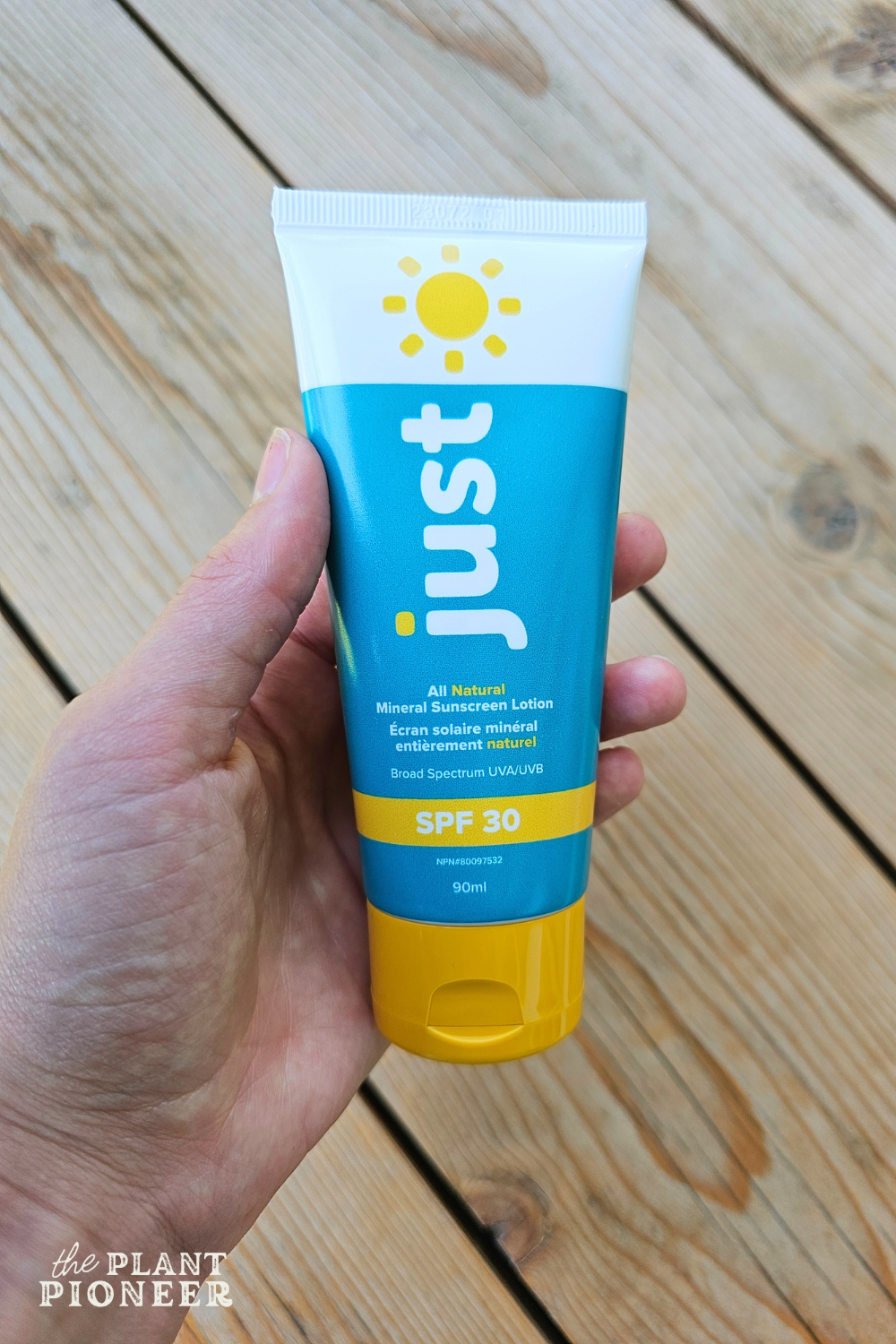
This is a new one I discovered this summer and have been trying out. So far I’ve been really impressed with it! It is easy to blend in and does not leave your skin feel greasy. It made my skin look slightly lighter than my actual tan, but didn’t leave any obvious white cast. The added lavender essential oil is a nice scent too!
This one has great ingredients with beeswax, shea butter, raspberry seed oil, sea buckthorn oil, and aloe vera being some of the key ones. I purchased it from well.ca.
Rocky Mountain Soap Co.
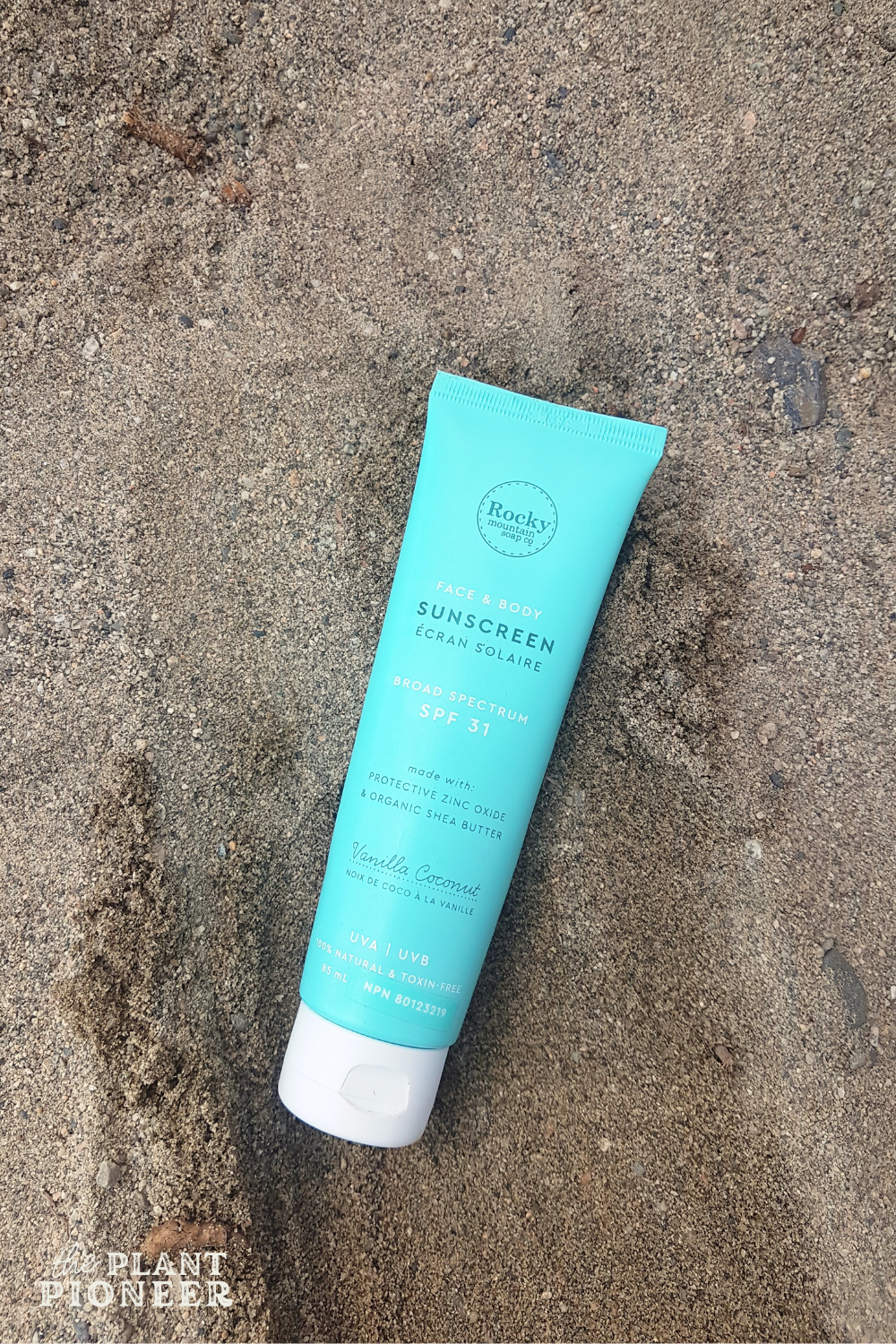
This one has become a favourite of mine that I buy every summer! It is tinted, which really helps to reduce the white cast that is left on the skin. It leaves skin feeling moisturized without being too heavy. The coconut vanilla scent is really nice, and I love this company’s commitment to natural ingredients.
The only disadvantages to this one are that it is a little more expensive, and product availability is sometimes limited. They only make a certain amount of it each summer, and I’ve been finding it isn’t available when I need it. For example, it’s currently June 24th and it is still not available for purchase (2025 update- it became available at the end of July. 2026 update- will not be available this summer due to a shortage of raw materials.)
I recommend signing up to be notified via email when it becomes available, or checking their website once a week in early summer to catch it when it becomes available!
Living Libations
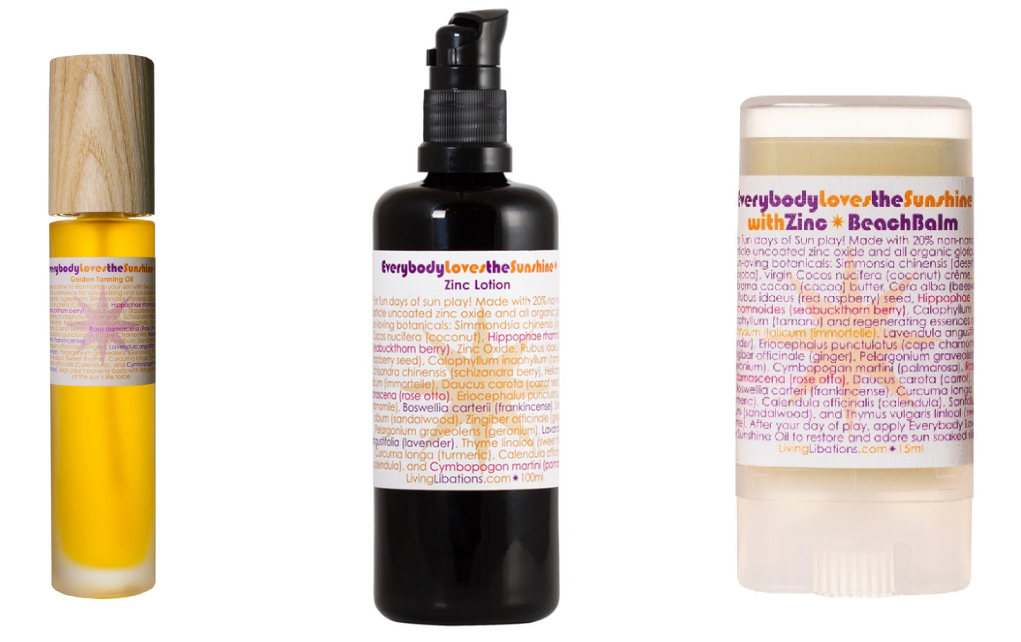
This company makes amazing natural products, loaded with plant extracts and NO questionable ingredients. I love their commitment to truly natural products, and their branding and packaging with a retro look is pretty fun!
They make 3 options for sunscreen that all look great:
- A skin oil that is not a sunscreen, but it does contain plant oils that provide some natural SPF protection. It would be suitable for skin that already has a base tan and doesn’t burn easily, or for using during non-peak hours and times of low-exposure.
- They also make a a more traditional mineral sunscreen that contains zinc oxide. It has amazing ingredients, and because of that, is one of the more expensive options on this list.
- A sunscreen balm that is less expensive than the zinc lotion.
Solara Skincare
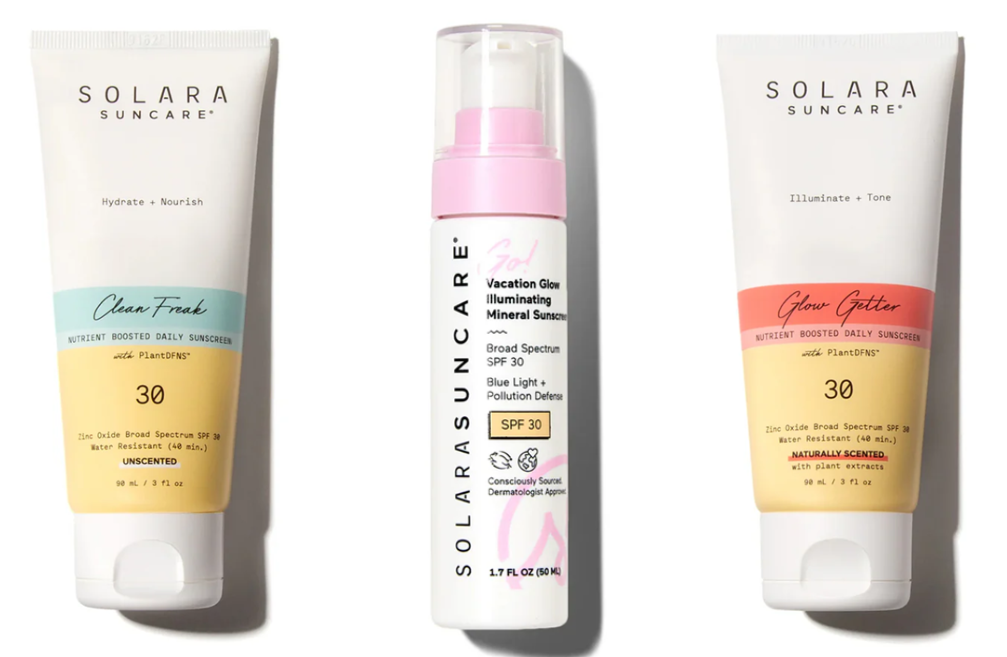
I have been wanting to try this brand for a while, and their sunscreens are now EWG verified! They have a few different options depending on what you need in a sunscreen.
A new addition to their line are the options with shimmer. I think the added shimmer could really help disguise the white cast on the skin and look really pretty. The reviews on the shimmer are really mixed… some love it and some don’t!
In Canada, you can shop Solara here on thedetoxmarket.ca.
Matter Company- Substance
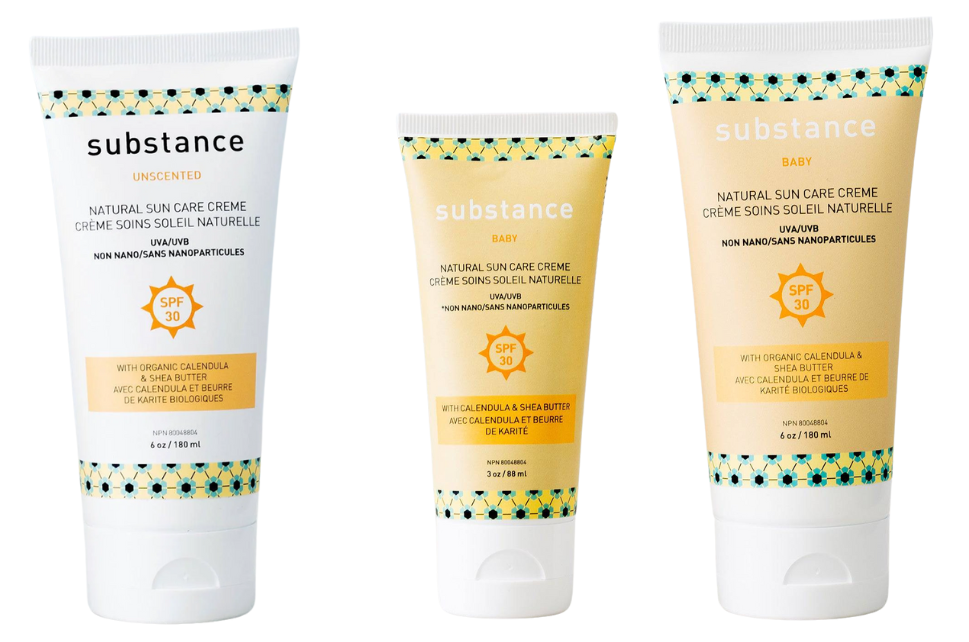
This company makes a lot of truly natural products with really good ingredients, and their sunscreen is no exception! This is one of the most natural ones on this list.
Their aloe vera gel is also currently the ONLY aloe gel I have found that doesn’t contain any questionable preservatives like sodium benzoate and phenoxyethanol. Amazing!
Love Sun Body
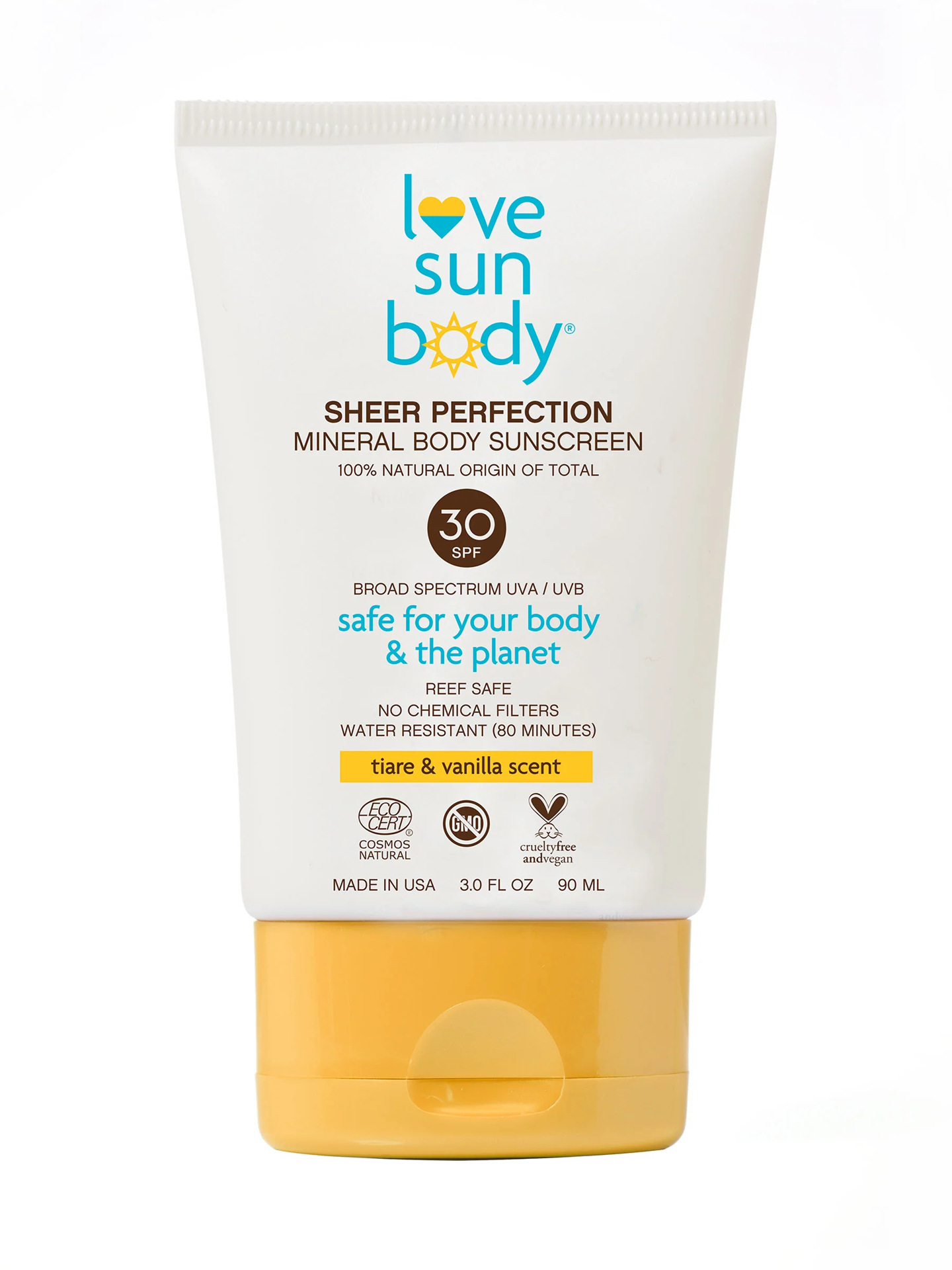
Another EWG verified option! This one gets great reviews, although it’s a little more expensive. It claims to be “sheer”, but I’m a little skeptical of that. The great reviews are convincing though!
The natural scent also sounds really nice. It’s conveniently available here on Amazon (but is currently sold out everywhere as of late June 2025).
Additional Notes
A few things I wanted to mention so you are aware:
- Babo Botanicals is another option that looked promising. It is even EWG Verified. However, their sunscreens contains Butyloctyl Salicylate, which I prefer to avoid (explained in more detail above).
- I noticed a few more natural sunscreens that contain alumina (which is aluminium oxide). While this is a different form of aluminum than the types that are in antiperspirants, any kind of aluminum is a red flag for me and I avoid it.
Phew, that is a lot of information! I hope this has helped make it a little easier to choose a non-toxic sunscreen. With all of these options, it sure is going to be hard to decide which one to try next!
Read this post next:
If you’ll be using a natural mineral sunscreen like the ones in this post, be sure to check out this post on how to make natural sunscreens easier to use. Trust me, you’ll want to know some of these tips!
Make sure to save this post to Pinterest to refer back to!
I just want to thank you for this post. My daughter is SEVERLY allergic to the key ingredients that are used in Chemical sunscreen including Butyloctyl Salicylate. We have really struggled over the last 20 years to find a sunscreen she doesn’t end up with a rash all over her body when using. So many sunscreens these days love to say they are a mineral sunscreen but then throw in some of the chemical reaction ingredients. I’ve learned so much about sunscreen over the years and being able to spot even derivities of those nasty chemicals.
Hi Shelley, thank you so much for your comment! Yes, you are absolutely correct- so many companies make their sunscreens/products sound better than they actually are in terms of ingredients. I hope you’ve been able to find one that works well for your daughter!
Some of your recommendations are not fragrance free. Not good. Vanilla scent worse than any salicylate
Hi Stephanie! Most of these recommendations are unscented, and the ones that have scent use only natural scent derived from essential oils and/or other plant extracts. The two that use vanilla are derived from natural vanilla bean; they are not synthetic fragrances. I do not recommend products that use any synthetic fragrance. I hope this clarifies things!
Any sunscreens 50SPF that doesn’t leave a white cast and is non toxic?
Hi Lisa- yes there are! Of the brands in this post, Green Beaver, Badger, Solara, and Attitude all offer SPF 50 options. I haven’t used the SPF 50 myself (only the SPF 30), so I can’t speak from personal experience about if it leaves a white cast. I’ve had good results with Green Beaver and Badger in SPF 30. Usually with higher SPF, this means a higher amount of titanium dioxide, which is what causes the white cast. You may find it helpful to read more about that in this post where I talk more about how to avoid the white cast: https://www.theplantpioneer.ca/tips-for-making-natural-mineral-sunscreen-easier-to-use/
Hi! Thank you for this post. As a mother of kiddos who have had reactions to some sunscreens this is welcome information. I wondered if you could recommend foundations with safe sunscreen. I like ILIA products, and wondered what your assessment would be of this foundation? Thanks in advance! https://www.sephora.com/product/ilia-super-serum-skin-tint-spf-40-foundation-P478281?country_switch=ca&skuId=2547040&om_mmc=ppc-GG_2024543160_70610901534_pla-296577360168_2547099_354815103809_9209580_c&gclsrc=aw.ds&gad_source=1&gad_campaignid=2024543160&gbraid=0AAAAADnIXb0r2i7iIF1mOjlOaVQ9by3zP&gclid=Cj0KCQjwxvjRBhC2ARIsAI7KJa32fYovCNPWahyD_-MDAAy9TqfWaOoGA-etD1QD4JrKX38r2uwsqJsaAjjYEALw_wcB
Hi Monica- you’re welcome! I could definitely recommend some safe foundations with SPF… I will keep that in mind for a future post! Currently, I use a tinted face sunscreen from Green Beaver, but they no longer sell it! ILIA makes some great products. However, the one you linked to does contain Butyloctyl Salicylate, so for that reason I probably wouldn’t recommend it. Butyloctyl Salicylate is an ingredient I discussed in more detail in this post above (in case you missed it!). Overall though, the ILIA one you linked to isn’t too bad and would still be better than most mainstream brands. If you’re looking for any custom recommendations on foundations with sun protection, you may want to consider one of my product consultations- you can see more details on my services page here.